
Quirky Canadian New Year’s Traditions: 10 Customs Worth Knowing
Table of Contents
Canadian New Year’s traditions are more than fireworks and countdowns. In different corners of the country, neighbours wear disguises, families hang mittens for treats, communities celebrate a second New Year, and one Ontario city drops a giant hockey puck. Some customs are still thriving; others live mainly in regional history. Here’s what happens, where it comes from, and how the stories fit into a Canadian winter trip.
Canadian New Year’s Traditions at a Glance
| Region | Tradition | Timing |
|---|---|---|
| Newfoundland | Mummering | Christmas season |
| Quebec | Bye Bye television special | December 31 |
| Prairies | Malanka | Traditionally January 13 |
| Prince Edward Island | Mother New Year mittens | December 31 |
| Cape Breton | Gaelic spirit-clearing ritual | New Year’s Eve |
| Quebec | Paternal blessing | January 1 |
| Sault Ste. Marie | Hockey puck drop | December 31 |
| Across Canada | Levées | January 1 |
| Quebec | La Guignolée | Historically near New Year’s |
| Nova Scotia | First-footing | After midnight |
1. Newfoundland and Labrador: Guess Who Is Mummering
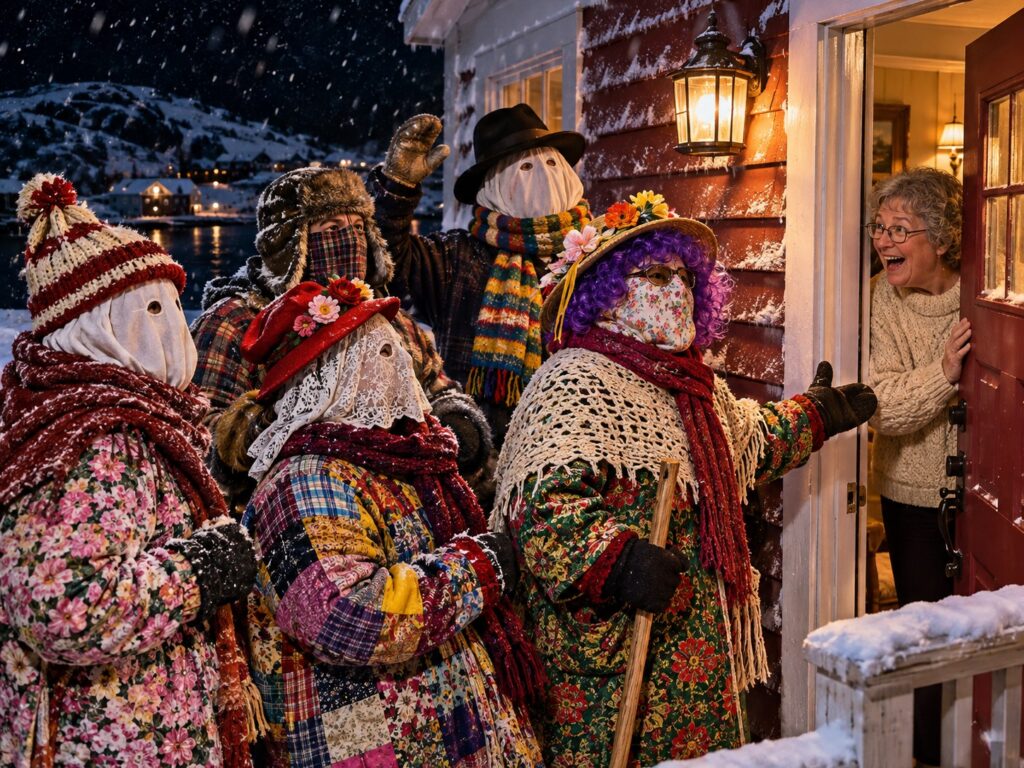
You hear a knock. On the doorstep stand masked visitors wearing mismatched clothes, speaking in strange voices and hoping you will guess who they are. Welcome to mummering, a Newfoundland and Labrador tradition of disguised visits, music, jokes and neighbourly hospitality. It belongs to the Christmas season, traditionally continuing into early January, rather than exclusively to New Year’s Eve.
Read more: Newfoundland and Labrador spring guide. Historical background: source and context.
2. Quebec: Everybody Watches Bye Bye
In Quebec, the loudest New Year’s Eve conversation often starts in the living room. The annual French-language television special Bye Bye lampoons the year’s politics, personalities and news. Radio-Canada reports more than four million viewers for its 2025 edition. Visitors who speak French, or enjoy a little local humour, have an instant conversation starter the next morning.
Read more: New Year’s Eve in Montréal. Historical background: source and context.
3. The Prairies: New Year’s Arrives Twice With Malanka
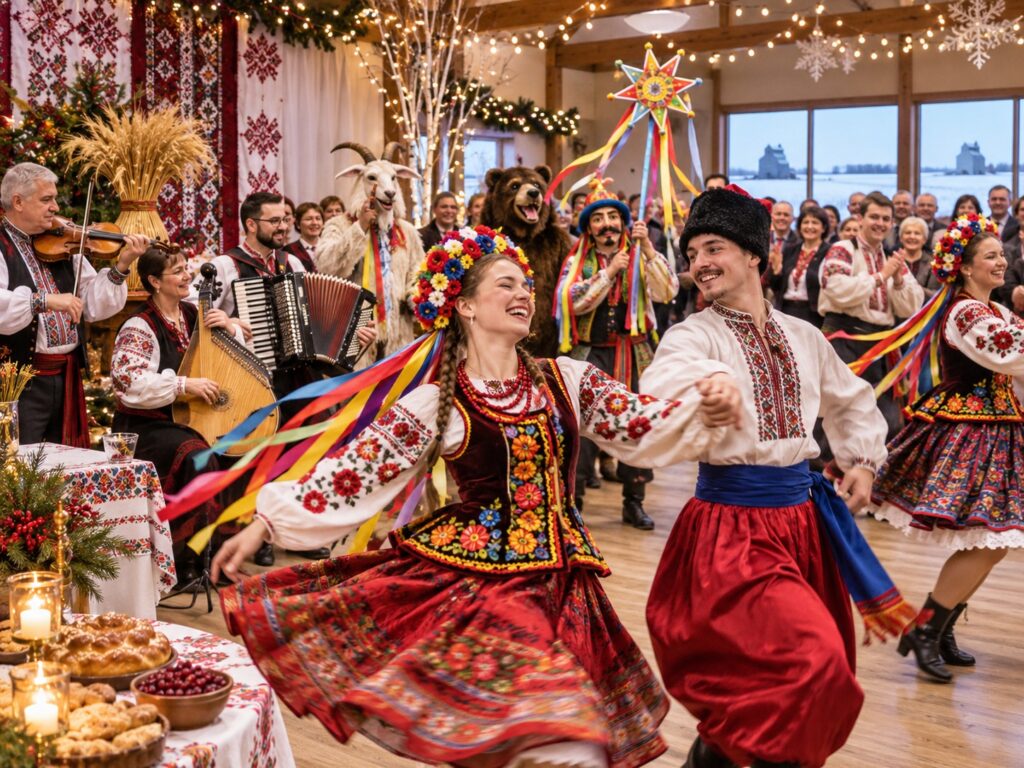
Ukrainian Canadian communities in Alberta, Saskatchewan and beyond celebrate Malanka, traditionally on January 13, ahead of the Julian-calendar new year on January 14. Expect folklore, dancing, music and sometimes elaborate disguises. Organizers occasionally schedule public festivities on nearby dates. At the University of Alberta, a major Malanka revival took place in 1973. For visitors, this is a cultural celebration to experience respectfully, not a staged tourist attraction.
Read more: Canada winter getaways. Historical background: source and context.
4. Prince Edward Island: Mother New Year Fills the Mittens
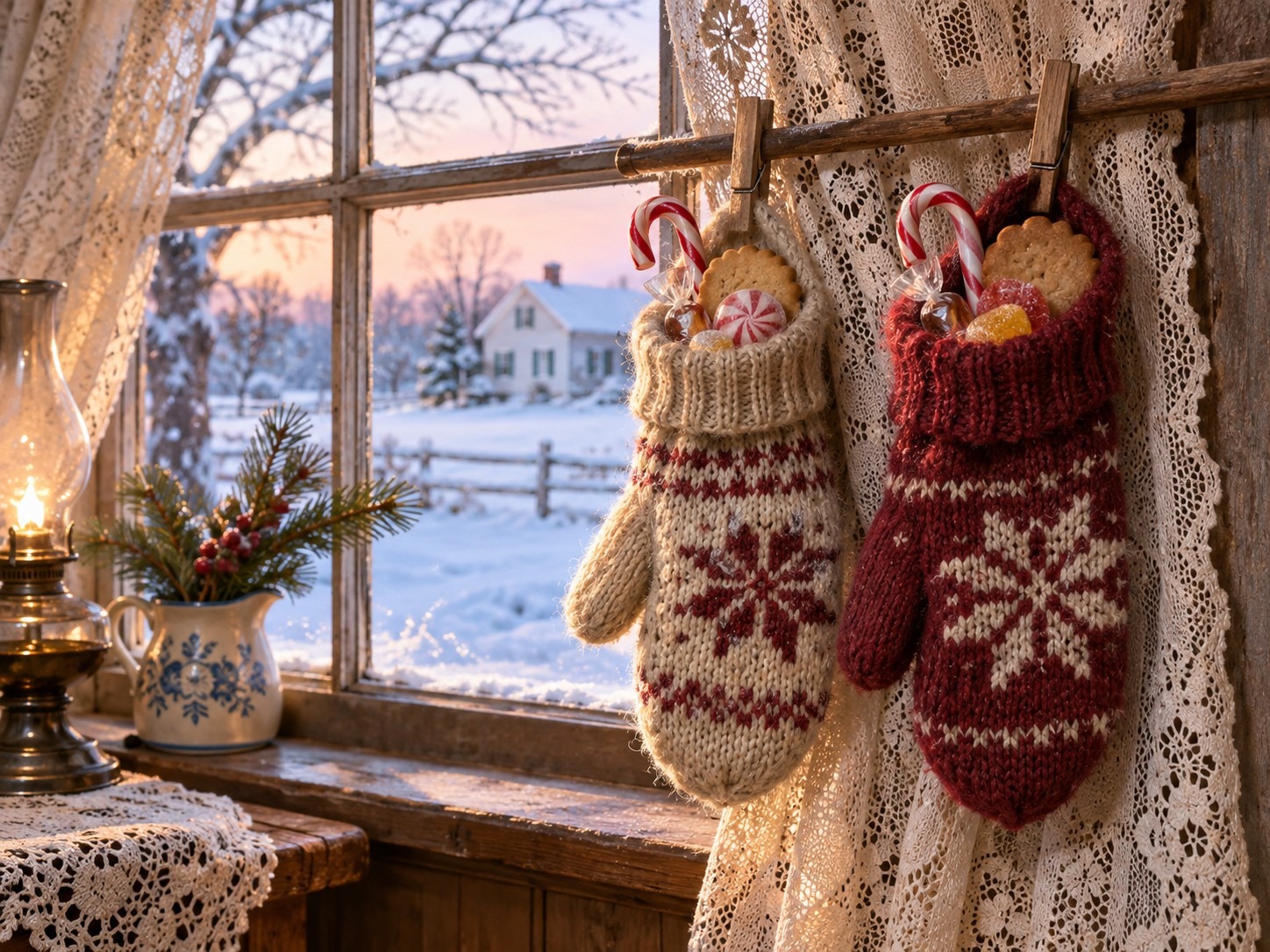
In parts of western PEI, children have hung mittens by a window or curtain on New Year’s Eve, hoping Mother New Year will leave small treats overnight. This family custom is described in a 2025 report based on Islanders’ recollections, including families who carried it to Ontario. One child remembered choosing the largest mitten available. Sensible planning, if you ask me. Its origins are less well documented than the better-known public traditions.
Read more: Canadian winter getaways. Historical background: source and context.
5. Cape Breton: Bang on the Walls and Banish Bad Luck
An old Gaelic Nova Scotia custom calls for people to walk clockwise around a house three times, striking the outside walls with sticks to drive away bad spirits. A New Year’s verse follows at the door, then food and hospitality inside. This is documented Gaelic folklore, not a claim that every Cape Breton household does it today. I’d enjoy the symbolism, although my neighbours might appreciate advance warning.
Read more: Halifax or Cape Breton getaway. Historical background: source and context.
6. Quebec: Asking for the Paternal Blessing
For generations, the first day of the year carried a family ritual in many French Canadian households. Children asked their father for a blessing, often with the eldest speaking for everyone. Known as la bénédiction paternelle, it reflects Quebec’s Catholic history and is far less common today. The story reminds us that New Year’s was once as much about family bonds as midnight festivities.
Read more: New Year’s Eve in Québec City. Historical background: source and context.
7. Sault Ste. Marie: Drop a Hockey Puck, Not a Ball
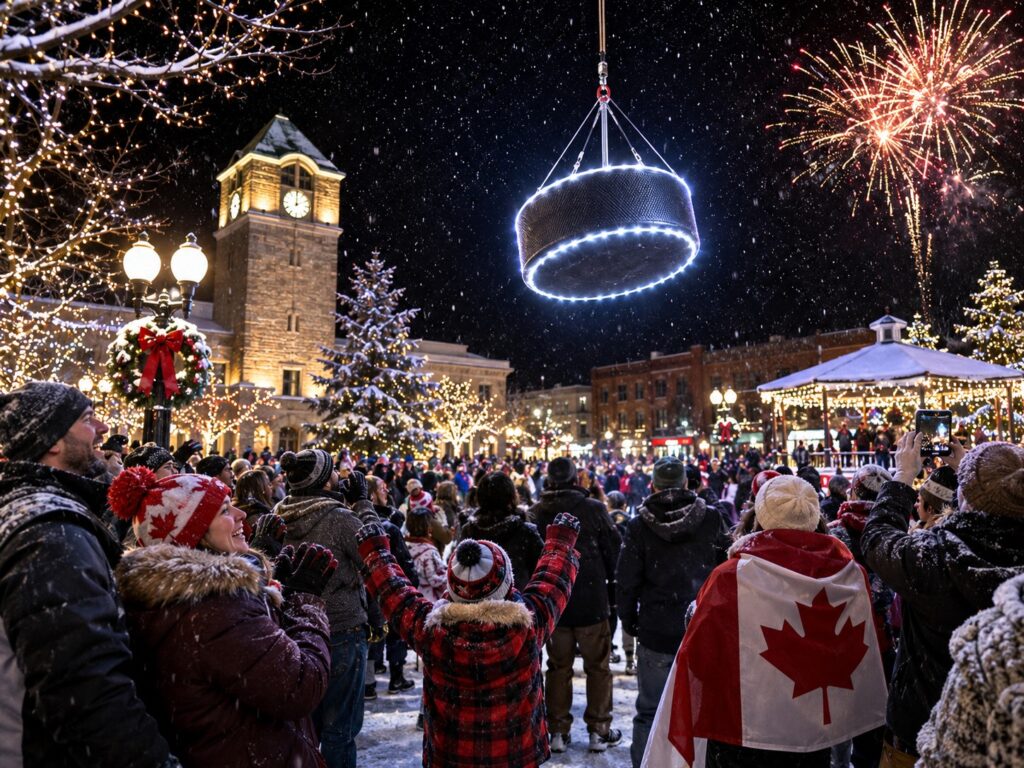
A city famous for hockey needed its own answer to the Times Square ball drop. Sault Ste. Marie chose a giant illuminated steel puck after residents voted for it. The Downtown Plaza countdown debuted on December 31, 2024, and returned to welcome 2026, including an earlier family countdown. A young tradition, yes, but wonderfully Canadian. Check future editions with the city before travelling.
Read more: Canadian New Year’s destination guide. Historical background: source and context.
8. Across Canada: The New Year’s Day Levée
A levée is a reception where people exchange New Year’s greetings with community, government or military representatives. This longstanding custom is especially visible on Prince Edward Island. Some receptions are open to the public; others have different admission rules. For a traveller who prefers conversation and history over a crowded midnight street party, a public levée is worth investigating.
Read more: New Year’s Eve in Ottawa. Historical background: source and context.
9. Quebec: La Guignolée Means Helping Your Neighbours
In older Quebec New Year’s customs, people travelled from door to door singing and collecting food or donations for neighbours in need. La Guignolée has evolved into charitable campaigns, usually taking place before Christmas rather than on December 31. The songs and timing changed; the spirit of community support endured.
Read more: New Year’s Eve in Montréal. Historical background: source and context.
10. Nova Scotia: Your First Visitor Brings the Luck
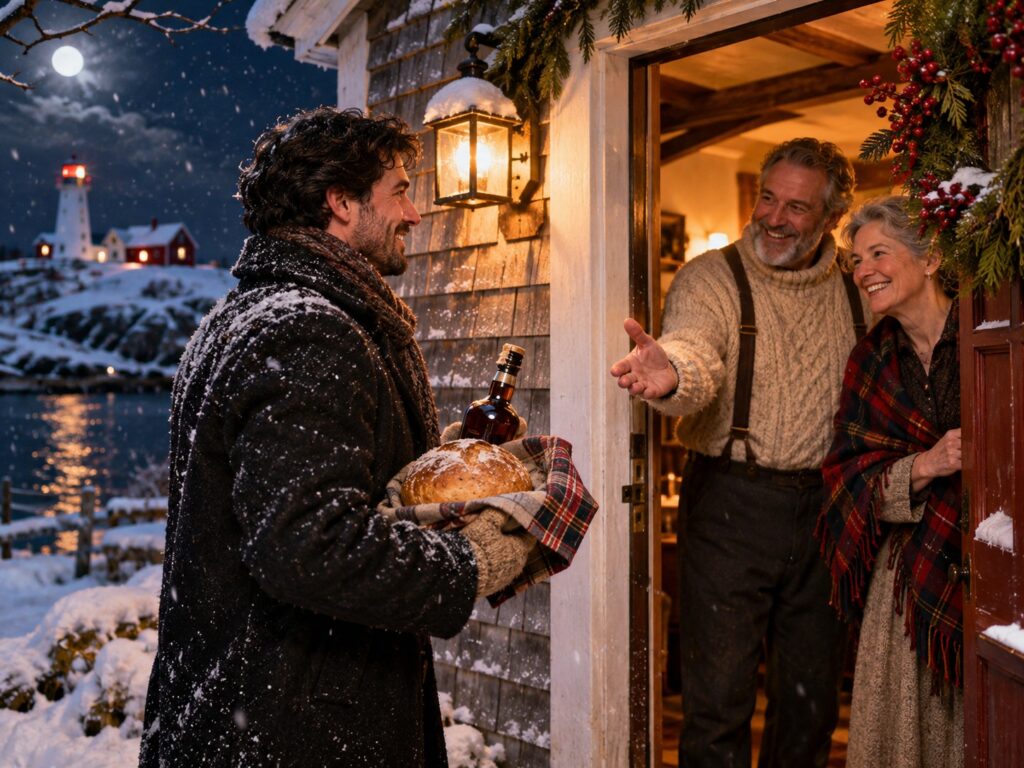
Scottish-influenced first-footing folklore says the first person entering your home after midnight influences the coming year’s fortunes. A dark-haired visitor carrying symbolic gifts, such as food or something to warm the household, was traditionally welcomed as lucky. You’ll find accounts from Scottish communities in Nova Scotia. These days, I’d be happy with any visitor bringing a good coffee.
Read more: Halifax or Cape Breton getaway. Historical background: source and context.
Where to Celebrate New Year’s Eve in Canada
Curious about traditions but planning an actual getaway? Start with the kind of evening you want, not a random fireworks photograph. Each of these destination guides covers practical choices, winter conditions and the experience on the ground.
Montréal · Québec City · Ottawa · Toronto · Niagara Falls · Windsor and Essex County · Canada destination comparison.
For a slower trip, see Canadian fall and winter getaways, and review accessible travel planning in Canada before booking around winter walking conditions. Public events, prices and programmes change each year. Confirm dates and admission with organizers.
Frequently Asked Questions
What are some unusual Canadian New Year’s traditions?
Newfoundland mummering, Ukrainian Canadian Malanka, Nova Scotia first-footing, PEI’s Mother New Year mittens and Sault Ste. Marie’s puck drop are examples. Some occur outside December 31.
Do all Canadians celebrate New Year’s on January 1?
January 1 is Canada’s civil New Year’s Day. Communities also celebrate culturally significant dates, including Malanka, traditionally January 13 and 14.
Are these traditions still practised?
Some remain active, including Bye Bye, Malanka and levées. Others survive largely in family memories, historical accounts and cultural preservation.
Is this a list of events happening this year?
No. This is an evergreen guide to customs, not a confirmed 2026 event calendar. Always verify the current year with the organizer.
Final Thoughts
I love travelling for the local stories, not only the headline attractions. A mysterious visitor in Newfoundland or an old New Year’s blessing in Quebec tells you something about the people behind the place. This collection will grow as new regional stories are documented. Have a family custom I missed? Share the location, the story and whether anyone still celebrates it. I’d love to hear it.
Internal Links
Newfoundland and Labrador spring guide · Montréal New Year’s guide · Canadian winter getaways · Halifax or Cape Breton getaway · Québec City New Year’s guide · Canada destination comparison New Year’s guide · Ottawa New Year’s guide · Toronto New Year’s guide · Niagara Falls New Year’s guide · Windsor and Essex County New Year’s guide
External References
Newfoundland seasonal customs · Radio-Canada audience · University of Alberta Malanka · Mother New Year accounts · Gaelic Nova Scotia customs · Historical paternal blessing · Sault Ste. Marie official announcement · PEI levées · La Guignolée background · Nova Scotia first-footing
Research checked November 16, 2026. Historical practices vary among communities; current public-event details should be verified with organizers.
Please note: the opinions expressed in this post should never be construed as advice. The thoughts are based on my experiences and those of my friends and family. Whether traveling, exercising or other activity it is always a matter of personal preference.  Find what you like and enjoy and share if you want with us all!
Also: If considering a change in diet, exercise, nutrition and or supplements, you must consult your medical practitioner to make sure that what you are about to embark upon doesn’t interfere with your current treatments.
Photo acknowledgements
Where the image contains my watermark of Al Murray Photography, I hold the copyright to that image. If interested in purchasing images or license agreements, please visit: https://almurrayphotography.com/ or you can contact me via email at: althephotographer101@gmail.com
Other images are sourced via “Unsplash.” Please visit and show them some love. Below I will list the artists whose work I am using. I will, from time to time, use AI to enhance one of my own images or create images that suit the subject matter.